Overview
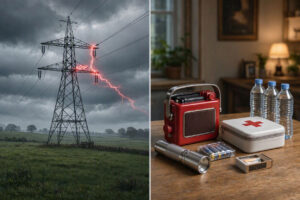
Winter storms bring high winds, heavy rain or snow, and the risk of widespread power cuts. The Met Office issues colour‑coded warnings – Yellow, Amber and Red – to indicate the likelihood and potential impact of severe weather on the UK’s infrastructure.
These warnings are not predictions of a specific event, but alerts that conditions could reach thresholds that threaten safety, transport and utilities. Understanding the meaning of each level helps households decide when to activate their preparedness plans.
Power outages can last from a few minutes to several days, especially in rural or coastal areas where the network is more exposed. Knowing what to expect and how to respond reduces stress and protects health, particularly for vulnerable people.
How it manifests in the UK
The UK’s temperate maritime climate means winter storms often develop over the Atlantic and track eastwards, bringing gusts over 70 mph in exposed regions such as the Scottish Highlands, the Pennines and coastal East Anglia. These winds can down trees, damage overhead lines and overload underground cables.
National Grid and regional distribution companies are required under the Energy Networks Association (ENA) to prioritise critical services (hospitals, emergency shelters) during an outage. However, residential customers may experience prolonged loss of electricity, heating and water supply, especially where mains water relies on electric pumps.
Legally, the UK government classifies power cuts as a civil emergency under the Civil Contingencies Act 2004, triggering specific guidance for local authorities and the public. The Met Office warning colour is linked to the UK Weather Warning Service, which is coordinated with the Department for Business, Energy & Industrial Strategy (BEIS).
Before: Preparation Checklist
Start preparing as soon as a Yellow warning is issued. Early action gives you time to stock supplies, test equipment and communicate plans with household members.
Key items to have ready:
- Portable battery‑powered lanterns or LED torches (minimum 2 per adult).
- Charged power banks – aim for at least 10 000 mAh per device.
- Manual can‑opener and a small stock of non‑perishable food (canned beans, pasta, dried fruit) sufficient for 72 hours.
- Fresh water – at least 2 litres per person per day.
- Warm blankets, sleeping bags and waterproof outerwear for each household member.
- Prescription medicines and a basic first‑aid kit, stored in a dry, easy‑to‑reach location.
- Backup heating source approved for indoor use (e.g., electric oil‑filled radiator with a UPS, or a certified solid‑fuel stove) – follow gov.uk fire safety guidance.
Additional steps:
- Check that your boiler and central heating controls have a battery backup or manual override.
- Label the main electricity fuse board and ensure all family members know how to switch off the mains safely.
- Register vulnerable household members with your local council’s emergency plan to receive priority assistance.
Review your insurance policy to confirm coverage for storm‑related damage and keep the policy number and claims phone number in an accessible place.
During: What To Do
When an Amber or Red warning is in force, treat the situation as a potential power outage. Follow the NHS advice on staying warm and safe: keep doors closed, wear layers, and avoid using unvented gas heaters indoors (NHS winter health tips).
If the electricity supply is lost:
- Switch off all high‑wattage appliances to prevent a surge when power returns.
- Use battery‑powered lights rather than candles to reduce fire risk.
- Keep fridge and freezer doors closed; a full freezer can keep food safe for up to 48 hours.
- Listen to local radio (BBC Radio 5 Live or community stations) or the Met Office website for real‑time updates.
For households with medical equipment that requires electricity, contact your supplier immediately and arrange a backup power solution such as a generator, ensuring it is operated outdoors with proper exhaust ventilation.
After: Recovery
When the grid is restored, check that all appliances switch on correctly. Reset any tripped circuit breakers and inspect visible wiring for damage before using it again.
Report any sustained outages or damaged infrastructure to your local Distribution Network Operator (DNO) – the contact details are on your electricity bill or at ENA storm impact page. Keep a record of the outage duration, as it may be needed for insurance claims.
Assess food safety: discard perishable items that have been above 4 °C for more than two hours. Use a food thermometer if unsure. Re‑stock any depleted supplies and review your checklist for any items that need replacement.
Finally, debrief with household members: what worked, what didn’t, and any adjustments needed for the next event. Update your emergency plan and inform neighbours, especially those who are elderly or disabled.
Official Sources
- Met Office – UK Weather Warnings: explanation of Yellow, Amber and Red alerts.
- Energy Networks Association – Storm Impact Reports: guidance on power cut priorities and restoration times.
- GOV.UK – Power Outage Advice: steps to take before, during and after an outage.
- NHS – Winter Health Tips: staying warm and safe during cold weather.
- GOV.UK – Fire Safety in the Home: safe use of alternative heating sources.
Official Sources
- Met Office – The UK’s national weather service providing warnings and forecasts.
- Energy Networks Association – The body representing the UK’s electricity and gas networks.
- ENA Newsroom – Latest updates and reports on network resilience and storm impacts.